Why recruiters still manually screen resumes in the age of AI
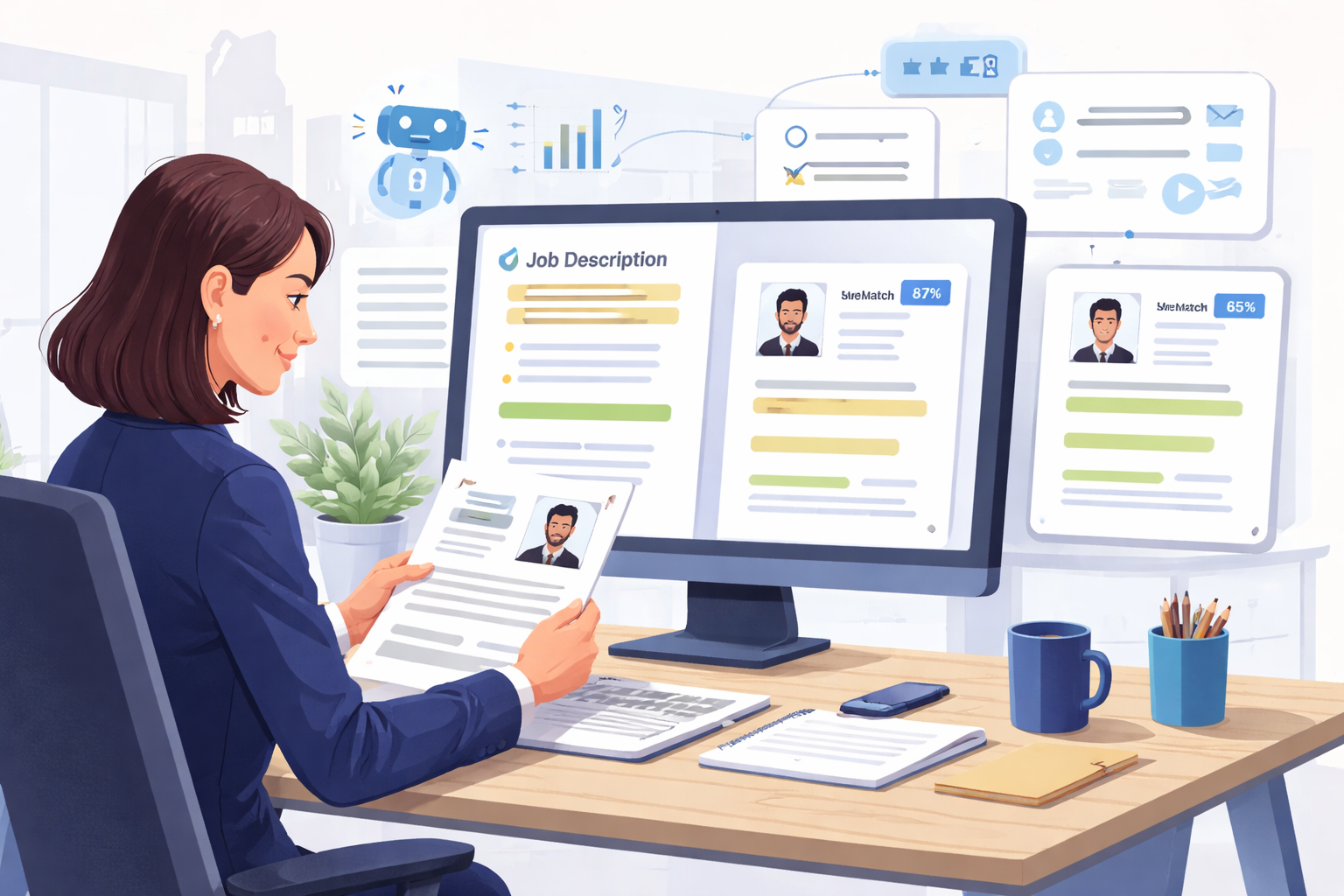
Over the last few years, AI has promised to automate resume screening and remove manual effort from hiring. In reality, most recruiters still review resumes themselves — often comparing each one directly against the job description.
This isn’t resistance to technology. It’s a response to trust, accountability, and the realities of modern hiring workflows.
AI hasn’t reduced resume noise — it has amplified it
One unintended consequence of AI-driven hiring tools is application volume. One-click applications and AI-written resumes have made it easier than ever to apply — and harder than ever to assess real fit.
Many resumes now mirror job descriptions closely, without always reflecting genuine experience. As a result, recruiters spend more time validating claims instead of less time screening.
What recruiters observe
Higher application counts, stronger keyword alignment, and more effort required to separate substance from surface-level matches.
Accountability keeps decisions human
When a hire doesn’t work out, responsibility doesn’t sit with a tool — it sits with the recruiter. This makes blind reliance on automated scoring risky.
Recruiters are expected to justify shortlists, explain rejections, and defend decisions to hiring managers. Manual review remains the safest way to retain ownership and confidence.
Context still beats one-size-fits-all scoring
Hiring decisions are rarely binary. Career breaks, unconventional paths, overlapping skills, or domain-specific experience often matter more than keyword matching.
Recruiters consider role context, team needs, and growth potential — signals that don’t translate cleanly into automated scores.
Explainability matters more than speed
Speed alone isn’t the goal. Recruiters need to answer simple but critical questions: Why this candidate? Why not another?
Decisions must be transparent and defensible. Tools that assist with clarity are more valuable than tools that attempt full automation.
Practical reality
Most effective teams combine assistive tools with manual review rather than replacing human judgment.
The future is assistive, not autonomous
The goal isn’t to remove recruiters from the process — it’s to reduce cognitive load while preserving control.
Tools that highlight strengths, surface gaps, and support comparison against a job description help recruiters work faster — without taking decision-making out of their hands. That’s the workflow Sortloud was built to support.
Closing thought
Manual resume screening persists not because recruiters resist technology, but because hiring demands trust, context, and accountability.
The most effective hiring workflows respect this reality — using tools to assist judgment rather than replace it.